
CDC - Understanding the Opioid Overdose Epidemic
Opioid overdose deaths remain high
Opioid-involved overdose deaths
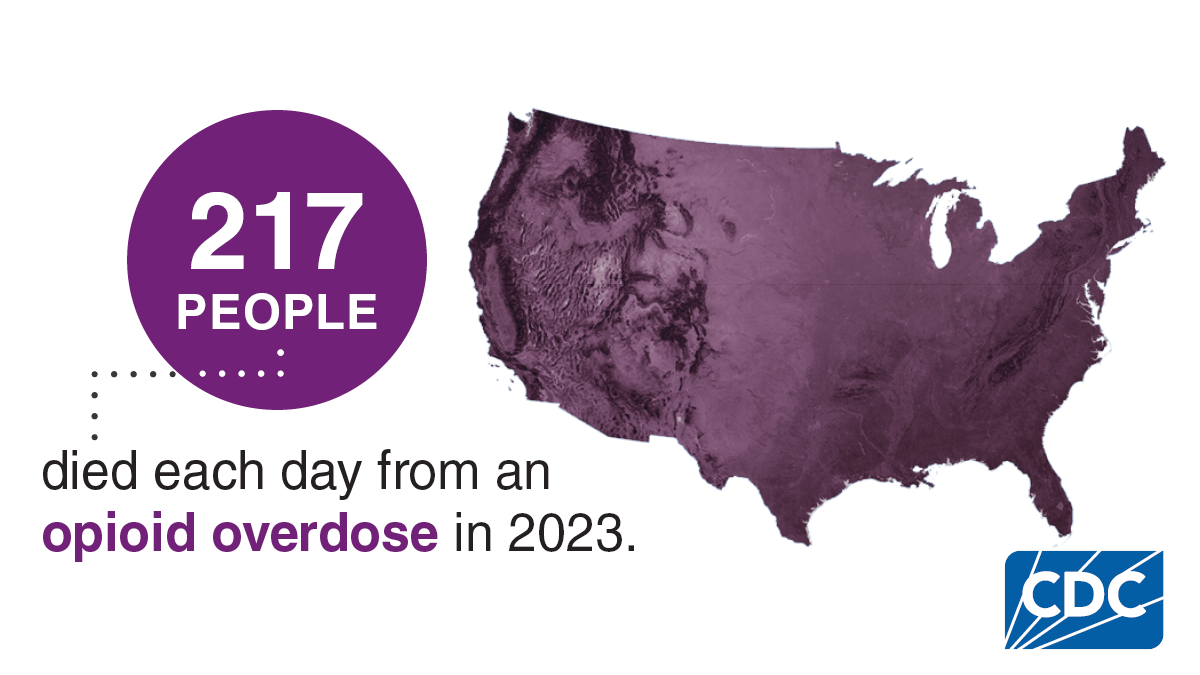
- Approximately 105,000 people died from drug overdose in 2023 and nearly 80,000 of those deaths involved opioids (about 76%).
- The number of people who died from an opioid overdose in 2023 was nearly 10 times the number in 1999; however, the opioid overdose death rate declined 4% from 2022 to 2023.
- Deaths involving various types of opioids are declining at different rates.
From 2022-2023:
- The rate of overdose deaths involving synthetic opioids other than methadone (primarily illegally made fentanyl and fentanyl analogs) decreased by 2%.
- The rate of overdose deaths involving heroin decreased approximately 33%.
- The rate of overdose deaths involving prescription opioids decreased nearly 12%.
Three waves of opioid overdose deaths
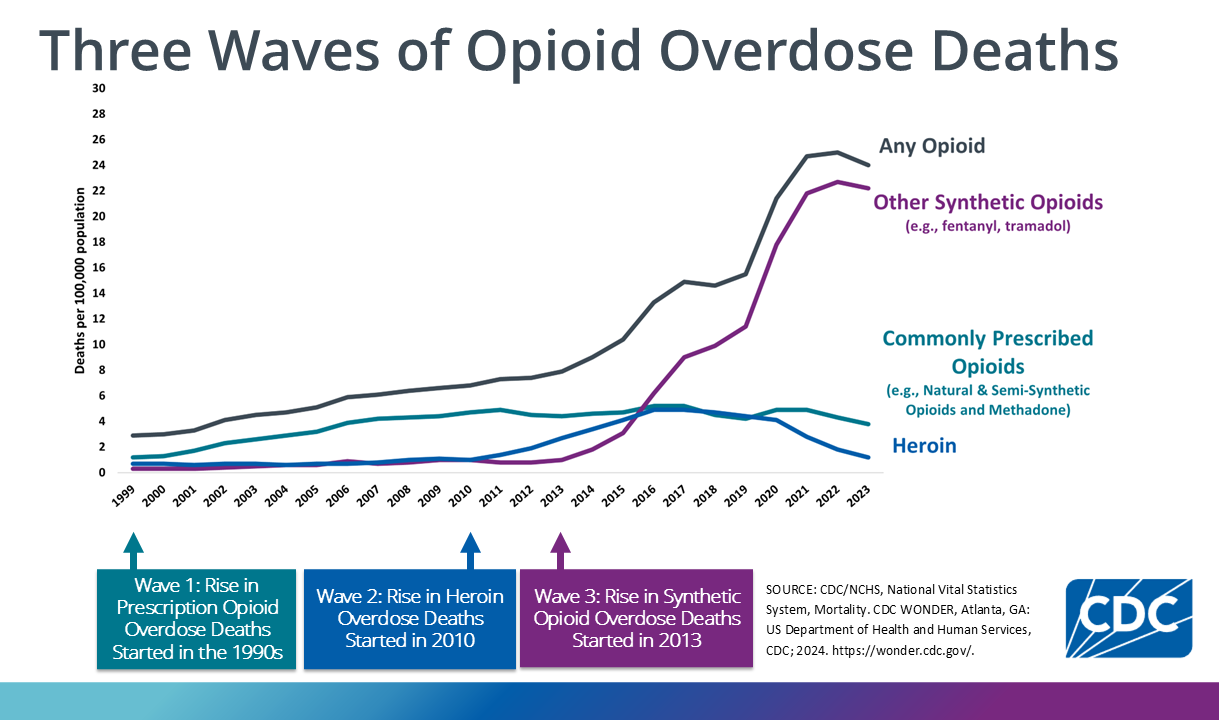
From 1999-2023, approximately 806,000 people died from an opioid overdose. This includes overdose deaths involving prescription and illegal opioids.
This rise in opioid overdose deaths can be outlined in three distinct waves.
First wave
The first wave began with increased prescribing of opioids in the 1990s. Overdose deaths involving prescription opioids (natural and semi-synthetic opioids and methadone) increased starting around 19993 but have declined in recent years.
Second wave
The second wave began in 2010, with rapid increases in overdose deaths involving heroin. However, in recent years, heroin overdose deaths have been declining.
Third wave
The third wave began in 2013, with substantial increases in overdose deaths involving synthetic opioids, particularly those involving illegally made fentanyl and fentanyl analogs (IMFs). IMFs have largely saturated the illegal drug supply. They are often found in powder form or pressed into counterfeit pills and can have other drugs mixed into them. More recently, non-opioid sedatives, such as xylazine, have been found mixed into IMFs. From 2022 to 2023, the rate of overdose deaths involving synthetic opioids decreased approximately 2%.
In the current landscape, many opioid overdose deaths also involve other drugs. In 2023, among a sub-set of jurisdictions, nearly 47% of drug overdose deaths involved both opioids and stimulants.
Confronting the opioid overdose epidemic
CDC is committed to addressing the opioid overdose epidemic and supporting states and communities as they continue work to identify outbreaks, collect data, respond to overdoses, and provide care to those in their communities.
What CDC's work focuses on
- Monitoring trends to better understand and respond to the epidemic.
- Advancing research by collecting and analyzing data on opioid overdoses and improving data quality to better identify areas that need assistance and to evaluate prevention efforts.
- Building state, local and tribal capacity by equipping states with resources, improving data collection, and supporting use of evidence-based strategies. Overdose Data to Action (OD2A) is cooperative agreement provides funding to 90 health departments under two distinct OD2A programs to reduce drug overdoses and related harms.
- Supporting providers, healthcare systems, and payers with data, tools, and guidance for evidence-based decision-making to improve opioid prescribing and patient safety.
- Partnering with public safety officials and community organizations, including law enforcement, to address the illegal opioid problem.
- Increasing public awareness about prescription opioid misuse and overdose and to make safer choices about opioids.
Overdose Data to Action
Overdose Data to Action (OD2A) is a cooperative agreement that provides funding to 90 health departments under two distinct OD2A programs (State and LOCAL) to reduce drug overdoses and related harms. This cooperative agreement supports jurisdictions in implementing prevention activities and in collecting accurate, comprehensive, and timely data on nonfatal and fatal overdoses and in using those data to enhance programmatic and surveillance efforts. OD2A focuses on understanding and tracking the complex and changing nature of the drug overdose crisis by seamlessly integrating data and prevention strategies.
Collaboration helps save lives
Collaboration is essential for success in preventing opioid overdose deaths. Medical personnel, emergency departments, first responders, public safety officials, mental health and substance use treatment providers, community-based organizations, public health, and members of the community all bring awareness, resources, and expertise to address this complex and fast-moving epidemic. Together, we can better coordinate efforts to prevent opioid overdoses and deaths.